> ## Documentation Index
> Fetch the complete documentation index at: https://developers.authlete.com/llms.txt
> Use this file to discover all available pages before exploring further.
# Developer Console
> Authlete offers Developer Console so that you can let your third-party developers manage their API clients.
# Introduction
**Developer Console** is a Web console for developers to manage their client applications.
It is not explicitly written in any specification, but you have to provide third-party developers (and yourself) with a Web console for them to manage their client applications. It is a time-consuming task to develop such a tool, but you are free from the task. Authlete offers Developer Console and you can let your third-party developers use it.
To let third-party developers login Developer Console, you are required to implement a developer authentication callback endpoint. On the other hand, if you are the only developer for your service, you don't have to implement the endpoint. Read "[Developer Authentication Callback][dac]" for details.
Anyway, this document describes how to use Developer Console.
# Login
Developer Console for a service is provided at the URL below.
`https://cd.authlete.com/SERVICE_API_KEY/`
The login form accepts a pair of ID & password of a developer. It is different from the ID & password of your Authlete account.
Authlete delegates developer authentication to your developer authentication callback endpoint, so any developer cannot login Developer Console until you implement the endpoint for the service.
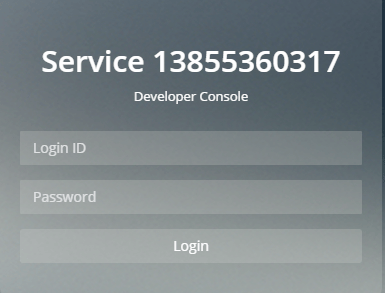
However, as a special behavior, the login form accepts the pair of API key & API secret of the corresponding service as if it were a valid pair of ID & password of a developer. Therefore, if you are the only person who manages client applications for your service, you don't have to implement a developer authentication callback endpoint.
Anyway, you (the service owner of the service) can **login Developer Console with the API key and the API secret** of the service without implementing a developer authentication callback endpoint.
It is only when you want to let other developers use Developer Console that you are required to implement a developer authentication callback. Read "[Developer Authentication Callback][dac]" for details.
# List Apps
To list client applications, do either of the following.
* Open "Menu" on the left and select "Your Apps".
* Access the URL below directly.
`https://cd.authlete.com/service-api-key/clients/list`
Right after registration, your first service has one client application, so if you login Developer Console with the API key and the API secret of the service, the list will appear like the following.
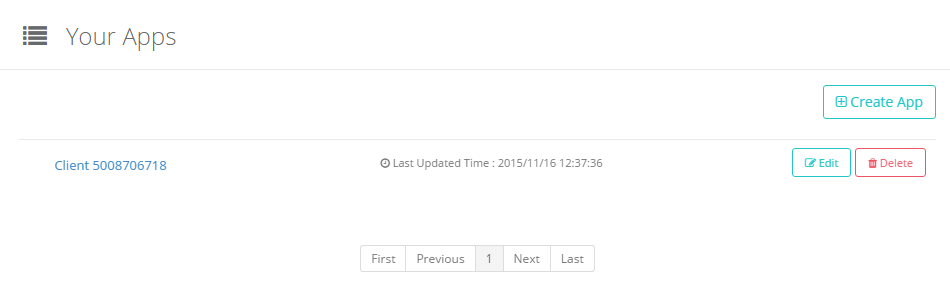
By clicking the client name, you can display App Details page of the client application. In the figure, "Client 5008706718" is the client name.
"Edit" button on the right is a button to start editing configuration parameters of the client application. See "[Edit App](#edit-app)" for details.
"Delete" button is a button to delete the client application. See "[Delete App](#delete-app)" for details.
# Create App
It is very easy to create a new client application using Developer Console. To start creating a new client application, do one of the following.
* Open "Menu" on the left and select "Create App".
* Click "Create App" button in the app list page.
* Access the URL below directly.
`https://cd.authlete.com/service-api-key/clients/new`
As the number of configuration parameters of a client application is not small, they are categorized. In Create App page, there are tabs for each category.
Change the values of the configuration parameters as you like, or leave all of them untouched to use their default values. See [Edit App](#edit-app) for details about the configuration parameters.
After editing, click "Create" button at the bottom of Create App page to create a new service.
That's all.
There are two upper limits on the number of client applications. One is the upper limit per developer. Its value is a configuration parameter of a service and can be changed using Service Owner Console. The other is the upper limit per service owner. Its value is determined based on your plan. For example, 10 is the upper limit for Free plan. See "Pricing" page for details.
# Edit App
## 1. Start Editing
To start editing configuration parameters of a client application, do either of the following.
* Click "Edit" button in Your Apps page or App Details page.
* Access the URL below directly. Don't forget to replace service-api-key and client-id.
`https://cd.authlete.com/service-api-key/clients/client-id/edit`
## 2. Configuration Categories
As the number of configuration parameters of a client application is not small, they are categorized. In Edit App page, there are tabs for the categories.
| Category | Description |
| ------------- | ------------------------------------------------------------------------ |
| Basic | Basic information such as client name, client ID and client secret. |
| Authorization | Settings related to authorization such as redirect URIs. |
| ID Token | Settings related to [ID token][idtoken] such as signature algorithm. |
| JWK Set | Settings related to JSON Web Key Set ([RFC 7517][7517]). |
| OIDC Endpoint | Settings related to OpenID Connect endpoints such as user info endpoint. |
| Document | URLs of documents of the client application. |
## 3. Configuration: Basic
| Setting Item | Description |
| ---------------- | --------------------------------------------------------------------------------------------------------------------------------------------------------------------------------------------------------------------------------------------------------------------------------------------------------------------------------------------------------------------------------------------------------------------------------------------------------------------------------------------------------------------------------------------------------------------------------------------------------------------------------------------------------------------------------------------------------------------------------------------------------------------------------------------------------------------------------------------------------------------------------------------------------------------------------------------------------------------------------- |
| Client Name | The name of this client application. 100 characters at most. This property corresponds to `client_name` in [OpenID Connect Dynamic Client Registration 1.0, 2. Client Metadata][reg_cm]. |
| Description | The description about this client application. 200 characters at most. |
| Client ID | The client ID assigned by the authorization server to this client application. This corresponds to `client_id` in [RFC 6749][6749]. |
| Client Secret | The client secret issued by the implementation of the authorization server to this client application. A random 512-bit value encoded by base64url (86 characters). This property corresponds to `client_secret` in [RFC 6749][6749].
Note that the authorization server issues a client secret even to a public client application, but the client application should not use the client secret unless it changes its client type to confidential. That is, a public client application should behave as if it had not been issued a client secret. To be specific, a token request from a public client of the authorization server should not come along with a client secret although [RFC 6749, 3.2.1. Client Authentication][6749_321] says as follows:
*Confidential clients or other clients issued client credentials MUST authenticate with the authorization server as described in Section 2.3 when making requests to the token endpoint.* |
| Client Type | The client type of this client application. Either `CONFIDENTIAL` or `PUBLIC`. See \[RFC 6749, 2.1. Client Types]\[6749\_21] for details. |
| Application Type | The application type of this client application. `WEB`, `NATIVE`, or unspecified. The value of this property affects the validation steps for a redirect URI. See the help of Redirect URIs for details.
This property corresponds to `application_type` in [OpenID Connect Dynamic Client Registration 1.0, 2. Client Metadata][reg_cm]. |
| Logo URI | The URL pointing to the logo image of this client application. The URL must consist of printable ASCII characters only and its length must not exceed 200.
This property corresponds to `logo_uri` in [OpenID Connect Dynamic Client Registration 1.0, 2. Client Metadata][reg_cm]. |
| Contacts | Email addresses of people responsible for this client application. Each email address must consist of printable ASCII characters only and its length must not exceed 100. The maximum number of email addresses is 255.
This property corresponds to `contacts` in [OpenID Connect Dynamic Client Registration 1.0, 2. Client Metadata][reg_cm]. |
## 4. Configuration: Authorization
| Setting Item | Description |
| -------------------------------------------- | -------------------------------------------------------------------------------------------------------------------------------------------------------------------------------------------------------------------------------------------------------------------------------------------------------------------------------------------------------------------------------------------------------------------------------------------------------------------------------------------------------------------------------------------------------------------------------------------------------------------------------------------------------------------------------------------------------------------------------------------------------------------------------------------------------------------------------------------------------------------------------------------------------------------------------------------------------------------------------------------------------------------------------------------------------------------------------------------------------------------------------------------------------------------------------------------------------------------------------------------------------------------------------------------------------------------------------------------------------------------------------------------------------------------------------------------------------------------------------------------------------------------------------------------------------------------------------------------------------------------------------------------------------------------------------------------------------------------------------------------------------------------------------------------------------------------------------------------------------------------------------------------------------------------------------------------------------------------------------------------------------------------------------------------------------------------------------------------------------------------------------------------------------------------------------------------------------------------------------------------------------------------------------------------------------------------------------------------------------------------------------------------------------------------------------- |
| Grant Types | Select grant types which this client application declares that it will restrict itself to using. This property corresponds to `grant_types` in [OpenID Connect Dynamic Client Registration 1.0, 2. Client Metadata][reg_cm].
`AUTHORIZATION_CODE` is a flow to get issued an authorization code at the authorization endpoint and exchange it with an access token at the token endpoint.
`IMPLICIT` is a flow to get issued an access token at the authorization endpoint directly.
`PASSWORD` is a flow to get issued an access token by presenting a user's credentials (ID & password) at the token endpoint. In normal cases, this flow is used only when other flows cannot be used for some reasons.
CLIENT\_CREDENTIALS is a flow to get issued an access token by presenting a client application's credentials (API key & API secret) at the token endpoint. Access tokens issued by this flow are not associated with any user.
`REFRESH_TOKEN` is a flow to exchange a refresh token for an access token at the token endpoint. |
| Response Types | Select response types which this client application declares that it will restrict itself to using. This property corresponds to `response_types` in [OpenID Connect Dynamic Client Registration 1.0, 2. Client Metadata][reg_cm].
In [RFC 6749][6749] (OAuth 2.0), what can be issued at a time at the authorization endpoint is either an authorization code or an access token, but the additional specification of [OAuth 2.0 Multiple Response Type Encoding Practices][mrtep] has enabled to issue any combination of an authorization code, an access token and an [ID token][idtoken]. Also, an option to issue nothing (`NONE`) has been created. Select whether to support or not for each combination.
`NONE`, `CODE`, `TOKEN` and `ID_TOKEN` mean that `none`, `code`, `token` and `id_token` can be independently specified as a value for `response_type` parameter of an authorization request, respectively. `CODE_TOKEN` means that the combination of `code token` can be specified as a value for `response_type` parameter. Likewise, `CODE_ID_TOKEN` is for the combination of `code id_token`, `ID_TOKEN_TOKEN` for `id_token token`, and `CODE_ID_TOKEN_TOKEN` for `code id_token token`. |
| Redirect URIs | Redirect URIs that this client application uses to receive a response from the authorization endpoint. Requirements for a redirect URI are as follows.
**Requirements by RFC 6749** (From [RFC 6749, 3.1.2. Redirection Endpoint][6749_312]):
- Must be an absolute URI.
- Must not have a fragment component.
**Requirements by OpenID Connect** (From [OpenID Connect Dynamic Client Registration 1.0, 2. Client Metadata][reg_cm], `application_type`):
- The scheme of the redirect URI used for [Implicit Grant][6749_42] by a client application whose application type is `web` must be `https`.
- The hostname of the redirect URI used for [Implicit Grant][6749_42] by a client application whose application type is web must be `localhost`.
- Based on [RFC 8252 OAuth 2.0 for Native Apps][8252], the scheme of the redirect URI for a client application whose application type is native may be either (1) a custom scheme or https, or (2) http, which is allowed only when the hostname is a loopback interface (e.g., 127.0.0.1, \[::1]). The use of localhost is permitted but NOT RECOMMENDED.
**Requirements by the server implementation**:
- Must consist of printable ASCII characters only.
- Must not exceed 200 characters.
Note that the implementation of the authorization server for this client application allows the application type to be unspecified. In other words, client applications do not have to choose `web` or `native` as application type. If the application type is not specified, the requirements by OpenID Connect are not checked by the authorization server.
An authorization request from a client application which has not registered any redirect URI fails unless at least all the following conditions are satisfied.
- The client type of the client application is 'confidential'.
- The value of `response_type` request parameter is `code`.
- The authorization request has the `redirect_uri` request parameter.
- The value of `scope` request parameter does not contain `openid`.
RFC 6749 allows partial match of redirect URI under some conditions (see [RFC 6749, 3.1.2.2. Registration Requirements][6749_3122] for details), but OpenID Connect requires exact match. |
| Client Authentication Method | The client authentication method that this client application declares that it uses at the token endpoint. This property corresponds to `token_endpoint_auth_method` in [OpenID Connect Dynamic Client Registration 1.0, 2. Client Metadata][reg_cm].
`NONE` corresponds `none` described in [OpenID Connect Core 1.0, 9. Client Authentication][core_ca]. Selecting this implies that this client application does not authenticate at the token endpoint.
`CLIENT_SECRET_BASIC` corresponds `client_secret_basic` described in [OpenID Connect Core 1.0, 9. Client Authentication][core_ca]. This is the Basic Authentication based method described in [RFC 6749, 2.3. Client Authentication][6749_23]. Authorization servers must support this client authentication method.
`CLIENT_SECRET_POST` corresponds `client_secret_post` described in [OpenID Connect Core 1.0, 9. Client Authentication][core_ca]. In this method, client credentials are embedded in the request body as described in [RFC 6749, 2.3. Client Authentication][6749_23].
`CLIENT_SECRET_JWT` corresponds `client_secret_jwt` described in [OpenID Connect Core 1.0, 9. Client Authentication][core_ca].
`PRIVATE_KEY_JWT` corresponds `private_key_jwt` described in [OpenID Connect Core 1.0, 9. Client Authentication][core_ca]. |
| Assertion Signature Algorithm | The value of `alg` header parameter of JWS ([RFC 7515][7515]) which is used for client authentication at the token endpoint.
If none of the algorithms is selected, it means that this client appplication may sign using any algorithm which is supported by the authorization server. On the other hand, if an algorithm is selected, this client application must use the algorithm.
This property is used only for the two JWT-based client authentication, namely, `PRIVATE_KEY_JWT` and `CLIENT_SECRET_JWT`.
This property corresponds to `token_endpoint_auth_signing_alg` in [OpenID Connect Dynamic Client Registration 1.0, 2. Client Metadata][reg_cm]. |
| Request Object Signature Algorithm | The value of `alg` header parameter of JWS ([RFC 7515][7515]) that this client application uses for signing a [request object][reqobj].
If none of the algorithms is selected, it means that this client application may use any algorithm supported by the authorization server. On the other hand, if an algorithm is selected, request objects sent from this client application must be signed using the algorithm. Request objects signed by other algorithms are rejected. Note that `NONE` is different from 'nothing is selected'.
If an asymmetric signing algorithm is selected, this client application must make available its JWK Set ([RFC 7517][7517]) which contains a public key for the authorization server to verify the signature of the request object. The URL of the JWK Set has to be set as the value of 'JSON Web Key Set URI'.
This property corresponds to `request_object_signing_alg` in [OpenID Connect Dynamic Client Registration 1.0, 2. Client Metadata][reg_cm]. |
| Request Object Encryption Algorithm | The value of `alg` header parameter of JWE ([RFC 7516][7516]) that this client application uses for encrypting a [request object][reqobj]. If an algorithm for Encryption Encoding Algorithm below this is selected, an algorithm for this property has to be selected.
Regardless of whether an algorithm for this property is selected or not, this client application may and may not encrypt a request object. Furthermore, this client application may use other supported encryption algorithms.
This property corresponds to `request_object_encryption_alg` in [OpenID Connect Dynamic Client Registration 1.0, 2. Client Metadata][reg_cm]. |
| Request Object Encryption Encoding Algorithm | The value of `enc` header parameter of JWE ([RFC 7516][7516]) that this client application uses for encrypting a [request object][reqobj]. If an algorithm is selected for Encryption Algorithm above this, the default value of this property is `A128CBC_HS256`.
This property corresponds to `request_object_encryption_enc` in [OpenID Connect Dynamic Client Registration 1.0, 2. Client Metadata][reg_cm]. |
| Request URIs | URLs each of which points to a [request object][reqobj]. Each URL must consist of printable ASCII characters only and its length must not exceed 200.
The implementation of the authorization server for this client application requires that URLs used as values for `request_uri request` parameter be pre-registered. URLs listed here are regarded as pre-registered. See [OpenID Connect Core 1.0, 6.2. Passing a Request Object by Reference][core_rup] for details. |
| Maximum Authentication Age | The default maximum authentication age in seconds. This value is used when an authorization request from this client application does not have `max_age` request parameter.
This property corresponds to `default_max_age` in [OpenID Connect Dynamic Client Registration 1.0, 2. Client Metadata][reg_cm]. |
| Default ACRs | The default ACRs (Authentication Context Class References). This value is used when an authorization request from this client application has neither `acr_values` request parameter nor `acr` claim in `claims` request parameter.
Each element must consist of printable ASCII characters only and its length must not exceed 200. |
## 5. Configuration: ID Token
| Setting Item | Description |
| ----------------------------- | -------------------------------------------------------------------------------------------------------------------------------------------------------------------------------------------------------------------------------------------------------------------------------------------------------------------------------------------------------------------------------------------------------------------------------------------------------------------------------------------------------------------------------------------------------------------------------------------------------------------------------------------------------------------------------------------------------------------------------------------------------------------------------------------------------------------------------------------------------------------- |
| Signature Algorithm | The value of `alg` header parameter of JWS ([RFC 7515][7515]) that this client application requires the authorization server to use for signing an [ID token][idtoken]. The default value is `RS256`.
`NONE` may be specified, but in that case, this client application cannot obtain an ID token from the authorization server. That is, an authorization request requesting an ID token fails.
This property corresponds to `id_token_signed_response_alg` in [OpenID Connect Dynamic Client Registration 1.0, 2. Client Metadata][reg_cm]. |
| Encryption Algorithm | The value of `alg` header parameter of JWE ([RFC 7516][7516]) that this client application requires the authorization server to use for encrypting an [ID token][idtoken]. If no algorithm is selected, it means that ID tokens are not encrypted. When an algorithm is selected for Encryption Encoding Algorithm below this, an algorithm for this property must be selected.
If the value of this property indicates an asymmetric encryption algorithm, this client application must make its JWK Set (RFC 7517) available at the URL pointed to by JWK Set URI (see 'JWK Set' tab). The JWK Set must contain a public key for the authorization server to use for encrypting ID tokens.
This property corresponds to `id_token_encrypted_response_alg` in [OpenID Connect Dynamic Client Registration 1.0, 2. Client Metadata][reg_cm]. |
| Encryption Encoding Algorithm | The value of enc header parameter of JWE ([RFC 7516][7516]) that this client application requires the authorization server to use for encrypting an ID token. If an algorithm is selected for Encryption Algorithm above this, the default value of this property is `A128CBC_HS256`.
This property corresponds to `id_token_encrypted_response_enc` in [OpenID Connect Dynamic Client Registration 1.0, 2. Client Metadata][reg_cm]. |
| Authentication Time Required | Select YES if this client application always requires the `auth_time` claim to be in ID tokens. This property corresponds to `require_auth_time` in [OpenID Connect Dynamic Client Registration 1.0, 2. Client Metadata][reg_cm]. |
| Subject Type | The subject type that this client application requests. See [OpenID Connect Core 1.0, 8. Subjct Identifier Types][core_sit] for details. This property corresponds to `subject_type` in [OpenID Connect Dynamic Client Registration 1.0, 2. Client Metadata][reg_cm].
Note that, however, the implementation of the authorization server for this client application does not support `PAIRWISE`, so it behaves the same way as `PUBLIC` even if `PAIRWISE` is set to this property. |
| Sector Identifier | The sector identifier which is a URL starting with `https`. The URL must consist of printable ASCII characters only and its length must not exceed 200. This URL is used by the authorization server to calculate pairwise subject values. See [OpenID Connect Core 1.0, 8.1. Pairwise Identifier Algorithm][core_pia] for details. This property corresponds to `sector_identifier_uri` in [OpenID Connect Dynamic Client Registration 1.0, 2. Client Metadata][reg_cm].
Note that, however, the implementation of the authorization server for this client application does not support pairwise subject values, so it does not refer to the value of this property. |
## 6. Configuration: JWK Set
| Setting Item | Description |
| --------------- | ---------------------------------------------------------------------------------------------------------------------------------------------------------------------------------------------------------------------------------------------------------------------------------------------------------------------------------------------------------------------------------------------------------------------------------------------------------------------------------------------------------------------------------------------------------------------------------------------------------------------------------------------------------------------------------------------------------------------------------------------------------------------------------------------------------------------------------------------------------------------------------------------------------------------------------------------------------------------------------------------------------------------------------------------------------------------------------------------------------------------------------------------------------------------------------------------------------------------------------------------------------------------------------------------------------------------------------- |
| JWK Set URI | The URL pointing to the JWK Set (JSON Web Key Set) of this client application. The URL must consist of printable ASCII characters only and its length must not exceed 200. The content of the resource pointed to by the URL must be JSON which complies with the format described in [RFC 7517, 5. JWK Set Format][7517_5]. Of course, the JWK Set must not include private keys of this client application.
If this client application requests encryption for ID tokens (from the authorization/token/userinfo endpoints) and/or signs/encrypts request objects, it must make available its JWK Set containing public keys for decryption and/or verification. The value of this property is the URL at which the JWK Set is available. The authorization server fetches the JWK Set from the URL.
[OpenID Connect Dynamic Client Registration 1.0, 2. Client Metadata][reg_cm] says that `jwks` (JWK Set Content) must not be used when the client can use `jwks_uri` (JWK Set URI), but the authorization server for this client application allows both properties to be registered at the same time and just does not use `jwks` when `jwks_uri` is registered.
This property corresponds to `jwks_uri` in [OpenID Connect Dynamic Client Registration 1.0, 2. Client Metadata][reg_cm]. |
| JWK Set Content | The content of the JWK Set (JSON Web Key Set) of this client application. The format is described in [RFC 7517, 5. JWK Set Format][7517_5]. Of course, the JWK Set must not include private keys of this client application.
[OpenID Connect Dynamic Client Registration 1.0, 2. Client Metadata][reg_cm] says that `jwks` (JWK Set Content) must not be used when the client can use `jwks_uri` (JWK Set URI), but the authorization server for this client application allows both properties to be registered at the same time and just does not use `jwks` when `jwks_uri` is registered.
This property corresponds to jwks in [OpenID Connect Dynamic Client Registration 1.0, 2. Client Metadata][reg_cm]. |
## 7. Configuration: OIDC Endpoint
| Setting Item | Description |
| ------------------------------------------------ | ----------------------------------------------------------------------------------------------------------------------------------------------------------------------------------------------------------------------------------------------------------------------------------------------------------------------------------------------------------------------------------------------------------------------------------------------------------------------------------------------------------------------------------------------------------------------------------------------------------------------------------------------------------------------------------------------------------------------------------------------------------------------------------------------------------------------------------------------------------------------------------------------------------------------------------------------------------------------------------------------------------------------------------------------------------------------------------------------------------------------------------- |
| User Info Endpoint Signature Algorithm | The value of `alg` header parameter of JWS ([RFC 7515][7515]) that this client application requires the authorization server to use for signing the JWT ([RFC 7519][7519]) returned from the [user info endpoint][core_ui]. When no algorithm is selected, data from the user info endpoint is not signed.
If both *Signature Algorithm and Encryption Algorithm* are not specified, the format of the response from the user info endpoint is a plain JSON (not JWT). Note that 'not specified' and `NONE` have different meanings for this property.
This property corresponds to `userinfo_signed_response_alg` in [OpenID Connect Dynamic Client Registration 1.0, 2. Client Metadata][reg_cm]. |
| User Info Endpoint Encryption Algorithm | The value of `alg` header parameter of JWE ([RFC 7516][7516]) that this client application requires the authorization server to use for encrypting the JWT ([RFC 7519][7519]) returned from the [user info endpoint][core_ui]. When no algorithm is selected, data from the user info endpoint is not encrypted. If an algorithm is selected for *Encryption Encoding Algorithm* below this, an algorithm for this property must be selected.
If the value of this property indicates an asymmetric encryption algorithm, this client application must make its JWK Set (RFC 7517) available at the URL pointed to by *JWK Set URI* (see 'JWK Set' tab). The JWK Set must contain a public key for the authorization server to use for encrypting data from the user info endpoint.
If both *Signature Algorithm and Encryption Algorithm* are not specified, the format of the response from the user info endpoint is a plain JSON (not JWT).
This property corresponds to `userinfo_encrypted_response_alg` in [OpenID Connect Dynamic Client Registration 1.0, 2. Client Metadata][reg_cm]. |
| User Info Endpoint Encryption Encoding Algorithm | The value of enc header parameter of JWE ([RFC 7516][7516]) that this client application requires the authorization server to use for encrypting the JWT ([RFC 7519][7519]) returned from the [user info endpoint][core_ui]. When an algorithm is selected for Encryption Algorithm, the default value of this property is `A128CBC_HS256`.
This property corresponds to `userinfo_encrypted_response_enc` in [OpenID Connect Dynamic Client Registration 1.0, 2. Client Metadata][reg_cm]. |
| Login Endpoint URI | The URL which a third-party program can use to initiate a login by this client application. The URL must start with `https` and consist of ASCII characters only. Its length must not exceed 200.
This property corresponds to `initiate_login_uri` in [OpenID Connect Dynamic Client Registration 1.0, 2. Client Metadata][reg_cm]. |
## 8. Configuration: Document
| Setting Item | Description |
| ---------------------- | -------------------------------------------------------------------------------------------------------------------------------------------------------------------------------------------------------------------------------------------------------------------------------------------------------------------------------------- |
| Terms of Service URI | The URL pointing to the Terms Of Service page. The URL must consist of printable ASCII characters only and its length must not exceed 200.
This property corresponds to `tos_uri` in [OpenID Connect Dynamic Client Registration 1.0, 2. Client Metadata][reg_cm]. |
| Client Data Policy URI | The URL pointing to the page which describes the policy as to how end-users' profile data are used. The URL must consist of printable ASCII characters only and its length must not exceed 200.
This property corresponds to `policy_uri` in [OpenID Connect Dynamic Client Registration 1.0, 2. Client Metadata][reg_cm]. |
| Home Page URI | The URL pointing to the home page of this client application. The URL must consist of printable ASCII characters only and its length must not exceed 200.
This property corresponds to `client_uri` in [OpenID Connect Dynamic Client Registration 1.0, 2. Client Metadata][reg_cm]. |
## 9. Apply Changes
After editing configuration parameters, click "Update" button at the bottom of Edit App page to apply the changes.
# Delete App
To delete a client application, click "Delete" button in Your Apps page or App Details page.
A confirmation dialog is displayed. Initially, "Delete" button in the dialog is disabled. Input the name of the client application in the text field in the dialog, and "Delete" button is enabled.
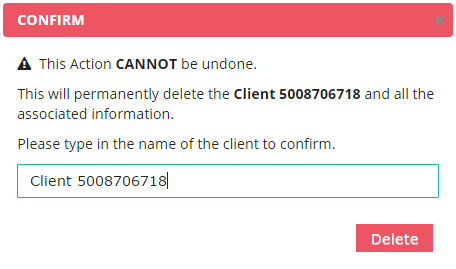
Click "Delete" button in the dialog, and the client application is deleted.
[dac]: /developers/definitive_guide/developer_authentication_callback
[core_ca]: https://openid.net/specs/openid-connect-core-1_0.html#ClientAuthentication
[idtoken]: https://openid.net/specs/openid-connect-core-1_0.html#IDToken
[reqobj]: https://openid.net/specs/openid-connect-core-1_0.html#JWTRequests
[core_rup]: https://openid.net/specs/openid-connect-core-1_0.html#RequestUriParameter
[core_sit]: https://openid.net/specs/openid-connect-core-1_0.html#SubjectIDTypes
[core_pia]: https://openid.net/specs/openid-connect-core-1_0.html#PairwiseAlg
[core_ui]: https://openid.net/specs/openid-connect-core-1_0.html#UserInfo
[mrtep]: https://openid.net/specs/oauth-v2-multiple-response-types-1_0.html
[reg]: https://openid.net/specs/openid-connect-registration-1_0.html
[reg_cm]: https://openid.net/specs/openid-connect-registration-1_0.html#ClientMetadata
[6749]: https://tools.ietf.org/html/rfc6749
[6749_42]: https://tools.ietf.org/html/rfc6749#section-4.2
[6749_23]: https://tools.ietf.org/html/rfc6749#section-2.3
[6749_321]: https://tools.ietf.org/html/rfc6749#section-3.2.1
[6749_312]: https://tools.ietf.org/html/rfc6749#section-3.1.2
[6749_3122]: https://tools.ietf.org/html/rfc6749#section-3.1.2.2
[7515]: https://tools.ietf.org/html/rfc7515
[7516]: https://tools.ietf.org/html/rfc7516
[7517]: https://tools.ietf.org/html/rfc7517
[7517_5]: https://tools.ietf.org/html/rfc7517#section-5
[7519]: https://tools.ietf.org/html/rfc7519
[8252]: https://tools.ietf.org/html/rfc8252